
SAYeTECH Team
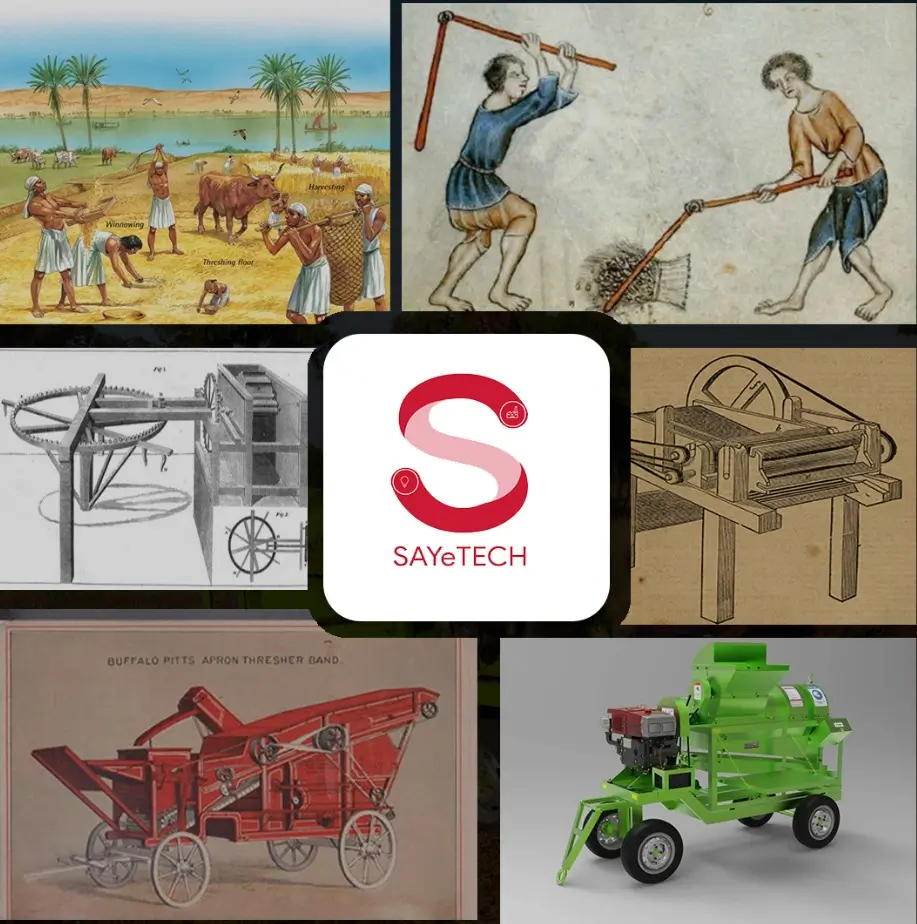
The journey of agricultural technology is a testament to human ingenuity and the relentless pursuit of efficiency. Among the most transformative innovations in this journey is the thresher—a machine that has evolved from simple hand tools to sophisticated, multi-functional equipment. This evolution not only reflects technological advancement but also highlights the changing needs of farmers across the globe.
The Early Days: Manual Threshing
For thousands of years, threshing was a labor-intensive process. Farmers would use flails—simple tools consisting of a wooden handle attached to a shorter, heavier stick—to beat harvested grain and separate the edible seeds from the chaff. This method, while effective, was time-consuming and physically demanding. In many parts of the world, including Africa, manual threshing remained the norm well into the 20th century.
The Mechanical Revolution
The Industrial Revolution brought about significant changes in agricultural practices. The invention of the mechanical thresher in the late 18th century marked a turning point. These early machines, powered by horses or steam engines, could process grain much faster than manual methods. However, they were often large, expensive, and required significant infrastructure, making them inaccessible to smallholder farmers.
The Modern Era: Multi-Crop Threshers
As technology advanced, threshers became more versatile and efficient. The development of multi-crop threshers represented a significant leap forward. Unlike their predecessors, which were designed for specific crops, modern multi-crop threshers can handle a variety of grains—from rice and wheat to maize and soybeans. This versatility is particularly valuable in regions like Africa, where farmers often cultivate multiple crops.
SAYeTECH's Role in African Agriculture
SAYeTECH has positioned itself at the forefront of this agricultural revolution in Africa. Our multi-crop threshers are specifically designed to meet the unique needs of African farmers. Here's how we're making a difference:
1. Affordability and Accessibility
We understand that cost is a major barrier for smallholder farmers. Our threshers are designed to be affordable without compromising on quality or efficiency. By making advanced threshing technology accessible, we're helping farmers increase their productivity and income.
2. Versatility for Diverse Crops
African agriculture is characterized by its diversity. Our multi-crop threshers can handle a wide range of crops, from cereals to legumes, making them an invaluable tool for farmers who practice crop rotation or mixed farming.
3. Reducing Post-Harvest Losses
Post-harvest losses are a significant challenge in Africa, with estimates suggesting that up to 30% of harvested crops are lost due to inefficient processing and storage. Our threshers minimize these losses by ensuring efficient and clean separation of grain from chaff, preserving more of the harvest for consumption or sale.
4. Empowering Women and Youth
Traditional threshing methods are physically demanding, often limiting the participation of women and youth in agricultural activities. Our machines reduce the physical burden, enabling more inclusive participation in farming and creating new economic opportunities.
Looking to the Future
The future of agriculture in Africa is bright, and SAYeTECH is committed to being a part of that future. We're continuously innovating, incorporating smart technologies like IoT sensors and data analytics into our equipment. These advancements will enable farmers to make more informed decisions, optimize their operations, and further increase their yields.
As we look ahead, our vision is clear: to empower every African farmer with the tools and technology they need to thrive. By building on the rich history of threshing technology and adapting it to the unique context of African agriculture, we're not just preserving tradition—we're shaping the future.
Join us on this journey as we continue to revolutionize agriculture across the continent. Together, we can build a more sustainable, productive, and prosperous future for African farmers.
You Have It!